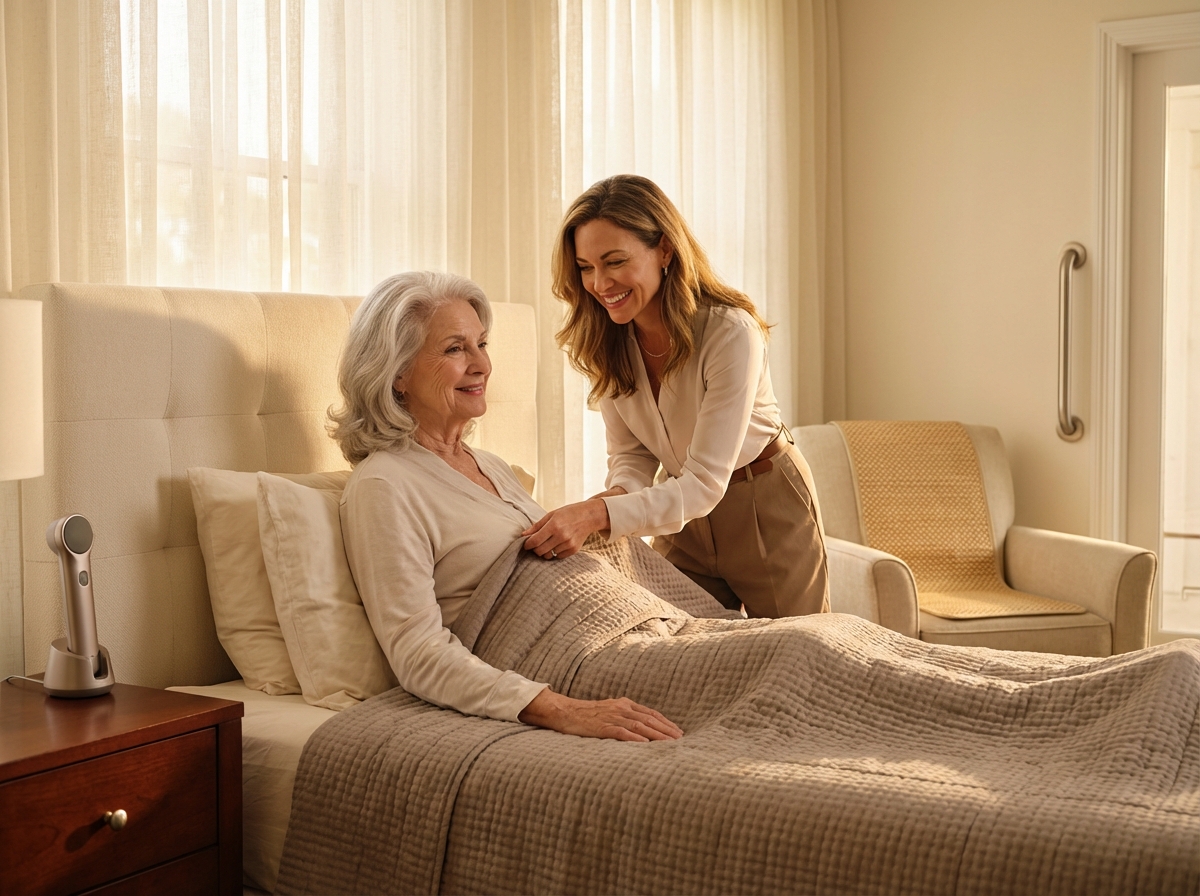
Weighted blankets are increasingly utilized to ease anxiety and improve sleep quality in older adults. This article explores the mechanism of deep pressure stimulation, the evidence supporting its benefits for seniors, critical safety considerations, and how to correctly select and pair a weighted blanket with practical home aids like grab bars and dressing tools to promote safe, independent living.
How weighted blankets work and what the evidence says
The science behind weighted blankets centers on a concept called deep pressure stimulation (DPS). This is a form of tactile input that applies firm, consistent weight to the body, similar to the feeling of a firm hug or being swaddled. For many seniors, this physical sensation triggers a specific response in the nervous system by targeting sensory receptors located beneath the skin. These receptors send signals to the brain that help regulate proprioceptive input—the sense of self in space. When the body feels this steady pressure, it often interprets the environment as safe, which can be especially helpful for older adults who experience sensory changes or increased sensitivity to noise and light.
Deep pressure stimulation directly influences the autonomic nervous system, which consists of two main branches: the sympathetic branch (fight or flight) and the parasympathetic branch (rest and digestion). Many seniors live in a heightened sympathetic state due to chronic pain or health anxieties. The weight of the blanket helps shift the body into a parasympathetic state, leading to a lower heart rate and slower breathing. By calming the physical symptoms of arousal, the blanket makes it easier for the mind to relax. This is why many users report a feeling of “groundedness” when they use the blanket during periods of high stress.
There are also chemical changes that occur in the brain. Research suggests that deep pressure may influence the production of neurotransmitters. One theory is that it helps lower cortisol, the primary stress hormone; high levels of cortisol at night can keep a person awake and alert. Simultaneously, the pressure may encourage the release of serotonin, a neurotransmitter that plays a major role in mood regulation and relaxation. Serotonin is also a precursor to melatonin, the hormone that signals the body it is time to sleep. By supporting this natural chemical cycle, weighted blankets may help seniors fall asleep faster and potentially stay in a deeper sleep for longer periods.
The clinical evidence for these effects has grown significantly. A major systematic review published in Frontiers in Psychiatry (2024) analyzed several studies on this topic. The findings showed that weighted blankets are effective for improving subjective sleep quality. Participants in these trials reported feeling more rested and experiencing lower levels of anxiety. One randomized controlled trial in Sweden focused on patients with insomnia found that those who used a weighted blanket saw a significant reduction in insomnia severity and had more energy during the day. However, it is important to note that objective metrics are less consistent. Tools like actigraphy or sleep lab tests do not always show a massive change in sleep architecture, suggesting that the primary benefit might be how the user perceives their rest rather than a total physiological change in sleep stages.
| Outcome Measure | Evidence Level | Typical Result |
|---|---|---|
| Subjective Sleep Quality | High | Significant improvement reported by users |
| Anxiety Reduction | Moderate to High | Measurable decrease in self reported stress |
| Sleep Onset Latency | Moderate | Users report falling asleep faster |
| Objective Sleep Metrics | Low to Mixed | Inconsistent results in lab settings |
There are still gaps in the research specifically for the senior population. Many of the largest trials included younger adults or people in psychiatric care. While the results are promising, seniors have unique needs; factors like cognitive impairment or physical frailty can change how a person responds to the weight. For example, a person with dementia might find the blanket confusing if it is introduced too quickly. Research into nursing home populations is still limited, though smaller observational studies show that staff often notice less agitation in residents who use weighted aids. Consequently, caution is required regarding long-term safety for those with multiple health conditions.
Interpretation of these results should be realistic. A weighted blanket is a tool, not a cure. It works best when it is part of a larger plan for sleep health, which includes maintaining a cool bedroom, following a regular schedule, and limiting caffeine in the afternoon. For seniors, it is vital to combine the blanket with other nonpharmacologic strategies, such as light exercise or relaxation techniques. If you have underlying health issues, you should talk to a doctor before starting. The evidence shows that while the science is still evolving, the subjective benefits for anxiety and calm are very real for many people.
Benefits for seniors including anxiety, insomnia and daily functioning
Anxiety reduction and emotional grounding
Many older adults live with a persistent sense of unease stemming from health changes or social isolation. A weighted blanket offers a physical way to manage these feelings without relying solely on medication. Research suggests that these blankets effectively alleviate negative emotions by providing a grounding sensation akin to a firm hug. This pressure helps the body move out of a state of high alert. For seniors who feel overwhelmed during the day, even a short session under the blanket can lower their heart rate and create a safe space. This immediate relief is often what people notice first; it is about finding a way to feel calm while sitting in a chair or resting in the afternoon, not just during sleep.
Managing mild insomnia and nighttime restlessness
Sleep patterns often change as we age, making it harder to fall and stay asleep. Data from recent surveys indicates that a significant majority of users report better sleep quality within just a few days of using a weighted blanket. On average, people may gain between 13 and 32 minutes of extra sleep each night. This occurs because the blanket reduces tossing and turning by keeping the body still. When the body is still, the brain receives fewer signals to stay awake, aiding sleep onset and helping people fall back to sleep faster if they wake up to use the bathroom. The consistent pressure acts as a physical cue that it is time for rest. You can read more about these findings in this study on the effect of weighted blankets on sleep and related disorders.
Relief for restless legs and dementia related agitation
Restless Legs Syndrome (RLS) is a common hurdle for senior sleep. The crawling sensation in the legs makes relaxation impossible. The weight of the blanket can provide a counter-pressure that dulls these sensations, helping the muscles feel settled. For those living with dementia, the benefits are often behavioral. Agitation and wandering at night are stressful for everyone involved. Small studies in care settings show that residents using weighted blankets for short periods (e.g., 3.7 hours a day) show less distress. The blanket provides a sensory focus and reduces the urge to pace, leading to a more peaceful environment. However, cognitive impairment brings unique risks. A person with advanced dementia might become confused or feel trapped by the weight. Supervised use is mandatory during the initial trial phase to observe facial expressions and body language for signs of distress.
Daytime alertness and fall risk reduction
Better sleep at night changes everything about the following day. When a senior sleeps deeply, they are more alert and their reaction times improve. This is vital for balance, as fatigue is a major contributor to falls in the home. By improving sleep quality, we indirectly support physical safety. Mood also sees a boost; a well-rested person is less likely to feel irritable or depressed, reducing the emotional load on family caregivers. When the senior is calmer and sleeps better, the caregiver can also rest, creating a positive cycle for the entire household. Alertness during the day means better engagement with hobbies and more meaningful social interactions.
Tracking progress and setting expectations
It is helpful to track how the blanket is working, as not everyone reacts the same way. Some people feel the benefits on the first night, while others need a week or two to adjust. Caregivers should watch for specific changes using a simple log to record progress over a 14-day period. Focus on measurable outcomes: how long it takes to fall asleep, the number of times the senior wakes up, and whether they need fewer “as needed” sleep medications. Self-reported anxiety levels on a scale of 1 to 10 are also useful. If the senior feels trapped or too hot, the weight might be too high. It is important to be realistic; a blanket is a tool, not a cure for chronic medical conditions.
| Outcome Metric | How to Measure | Success Indicator |
|---|---|---|
| Sleep Onset | Minutes until sleep | Reduction by 15 or more minutes |
| Night Awakenings | Count per night | Fewer interruptions or faster return to sleep |
| Daytime Naps | Duration and frequency | Less need for long naps due to better night rest |
| Anxiety Scale | Rating from 1 to 10 | Lower daily average scores |
| Medication Use | Doses of PRN sleep aids | Decreased frequency of use |
Variability in response
Every individual has a unique sensory threshold. Some seniors with very thin skin or fragile joints might find certain weights uncomfortable, while others with severe claustrophobia might feel increased anxiety. This is why the response varies so much. While many reports are positive, some objective studies show mixed results on actual sleep cycles. This means the benefit is often subjective. If the senior feels better, the intervention is a success. If they seem distressed, it is okay to stop. Always prioritize the comfort and the choice of the person using the blanket. A successful trial usually lasts two to four weeks before making a final decision on its value.
Choosing the right weighted blanket and integrating it with home safety aids
Selecting a weighted blanket for an older adult involves more than just picking a heavy quilt. The process requires careful thought about physical strength plus safety needs. A common starting point is the 7 to 12 percent rule. This means the blanket should weigh about 10 percent of the person’s total body weight. If someone weighs 150 pounds, a 15-pound blanket is a standard choice. But this rule must be adjusted for frailty. Many seniors have less muscle mass or fragile skin. For very frail individuals, a lighter range of 5 to 7 percent is much safer. It is vital that the user can move the blanket without help. If they feel pinned down, the weight is too high.
Weight Selection Guidelines
The following table helps match body weight to the right blanket weight. It includes adjustments for those who are more physically delicate.
| User Body Weight | Frail or Sensitive Range (5 to 7 percent) | Typical Senior Range (7 to 12 percent) |
|---|---|---|
| 100 pounds | 5 to 7 pounds | 7 to 10 pounds |
| 120 pounds | 6 to 8 pounds | 8 to 14 pounds |
| 140 pounds | 7 to 10 pounds | 10 to 16 pounds |
| 160 pounds | 8 to 11 pounds | 11 to 19 pounds |
| 180 pounds | 9 to 12 pounds | 12 to 21 pounds |
Materials, Construction, and Hygiene
The type of filler inside the blanket affects how it feels on the skin. Glass beads are usually the best option for seniors as they are much smaller than plastic pellets, allowing the blanket to lay flat and thin against the body. Plastic pellets can feel bulky or lumpy. Good construction is also a safety feature; look for box stitching (sewn into small squares) to keep the beads from bunching up, and reinforced seams to prevent leaks. Corner ties are helpful to secure the weighted insert to an outer cover so it does not shift.
Fabric choice is critical for temperature regulation. Many older adults struggle to regulate body heat, and dense fillers can trap warmth. Breathable materials like 100 percent cotton or bamboo viscose help keep the body cool. To further prevent overheating, keep the bedroom temperature between 65 and 68 degrees Fahrenheit. Hygiene is another practical concern; most home washing machines cannot handle the weight of a 15-pound insert, and frequent washing can damage seams. A removable, machine-washable duvet cover is a necessity. It allows caregivers to wash the outer layer weekly with regular bedding while spot-cleaning the heavy inner blanket only when necessary.
Skin Integrity and Pressure Points
Skin becomes thinner with age, and the constant pressure from a weighted blanket can create risks over bony areas like the hips, knees, or ankles. This risk is higher for those with limited mobility who do not shift positions frequently. It is important to check the skin every morning for the first week of use. Look for red spots that do not fade, as these can be the start of pressure sores. People with diabetes or peripheral neuropathy must be extra careful, as they might not feel the pressure or heat as easily. If any redness appears, stop using the blanket and talk to a healthcare provider.
Integrating Safety Aids
A weighted blanket should work with other home independence tools, not become an obstacle. If a senior uses bed rails or grab bars, ensure the blanket does not get tangled in them. Good bedside lighting is essential; motion sensor lights that illuminate the floor can help if they need to get up. Non-slip rugs should be placed along the path to the bathroom. To help with independence, consider adaptive bedding. Some covers have large zippers or loops. These dressing aids allow someone with arthritis to pull the blanket back without needing a lot of grip strength.
Clinician Consultation and Respiratory Safety
Before trying a weighted blanket, a doctor should be consulted if the senior has certain health issues. This includes chronic obstructive pulmonary disease (COPD), obstructive sleep apnea, heart failure, or circulatory problems. The added weight on the chest can increase the work of breathing or restrict full lung expansion. Most clinical guidelines suggest that people with severe respiratory issues should avoid weighted blankets unless a doctor provides specific clearance. This is especially true for those using supplemental oxygen or CPAP machines, as the weight could interfere with tubing. A Weighted Blanket Benefits review suggests that while they help many, medical clearance is key for these groups.
Pre-Trial Safety Checklist
Use this list before the first night of use to ensure safety.
- The 30-Second Test: Confirm the senior can lift and remove the blanket in under 30 seconds while sitting up. If they cannot, the blanket is too heavy.
- Check that the weight is no more than 12 percent of their body weight (or 5-7 percent if frail).
- Inspect all seams for loose beads or tears.
- Ensure the room temperature is cool to prevent overheating.
- Verify that a phone or call button is within easy reach.
- Perform a 20-minute supervised trial during the day to check for comfort and claustrophobia.
Conclusions and practical next steps for safe use
Weighted blankets serve as a valuable addition to a senior’s wellness toolkit. These tools provide deep pressure stimulation, a sensory input that helps the body transition from a state of high alert to one of rest. Many older adults find that the gentle weight reduces feelings of restlessness and leads to a more stable sleep cycle. Recent research suggests that these blankets effectively improve sleep quality and help alleviate negative emotions and daytime symptoms across various disorders. Success with this aid depends on careful selection and consistent monitoring.
Choosing the correct weight is the most critical step for safety. While the general guideline suggests 7 to 12 percent of body weight, seniors who are frail or have a low body mass index should stick to the more conservative 5 to 7 percent range. The goal is to provide comfort without restricting movement. A blanket that is too heavy can make it difficult for a senior to adjust their position, potentially causing physical fatigue or entrapment hazards.
Safety screening must happen before the first use. This is especially true for seniors with chronic health conditions. Individuals with COPD or obstructive sleep apnea should not use weighted blankets without medical clearance due to the potential for increased work of breathing. People with circulatory issues or fragile skin also need a professional evaluation. A doctor can help determine if the benefits of improved sleep outweigh the potential risks for these specific conditions.
A weighted blanket works best when it is part of a broader plan for home independence. It should complement other practical aids. For example, if a senior uses bedside grab bars to get out of bed, the blanket must be sized correctly so it does not hang over the edges and create a tripping hazard. If the senior uses dressing aids due to limited hand strength, they should choose a blanket with a large, easy-to-grip zipper on the cover. Integrating the blanket with non-slip rugs and adequate bedside lighting creates a safer environment for nighttime movements.
Implementation Checklist
A structured approach ensures the transition to a weighted blanket is smooth. Follow these steps to introduce the aid safely.
- Consult a Healthcare Provider
Review medical history for respiratory or cardiac contraindications. Ask about potential impacts on existing medications for sleep or anxiety. - Perform a Daytime Trial
Test the blanket for 20 to 30 minutes while the senior is awake and seated. Ensure they can lift and remove the blanket independently. - Establish Monitoring Metrics
Keep a simple log for the first two weeks. Track the time it takes to fall asleep, the number of nighttime awakenings, and daytime alertness levels. - Conduct Daily Skin Checks
Inspect contact points for redness or tenderness every morning. This is vital for seniors with diabetes or peripheral neuropathy who may have reduced sensation. - Define Stop Criteria
Discontinue use immediately if the senior experiences shortness of breath, new skin irritations, or if they feel trapped or exhibit increased agitation.
Monitoring the results helps determine if the blanket is effective. Some users notice a difference within a few days, while others may need two to four weeks to adjust. If sleep quality does not improve after a month, it may be time to re-evaluate the weight or the material. Breathable fabrics like cotton or bamboo are excellent for those who tend to overheat. Always prioritize products with reinforced seams and non-toxic fill materials like glass beads. Consulting with a doctor and reading trusted reviews will help you make an informed choice that supports long-term comfort and independence.
References
- The effect of weighted blankets on sleep and related disorders — Most of the included studies showed that weighted blankets could effectively improve sleep quality and alleviate negative emotions and daytime symptoms.
- Effectiveness of Anxiety Reduction in Adults by Weighted Blanket … — To date, weighted blankets were shown to improve sleep quality in people with insomnia and daytime fatigue, older people living in nursing …
- What Percentage of People Use Weighted Blankets? — 85% of the individuals reported their sleep quality highly improved within several days of using a weighted blanket. 75.5% of the survey …
- Weighted Blanket Benefits: Do They Work? – Health Cleveland Clinic — Some studies suggest weighted blankets may help reduce anxiety and improve sleep. The science is thin, but they may help some people.
- Best Weighted Blankets of 2025 – Sleep Foundation — The Bearaby Cotton Weighted Blanket is our choice for the best overall weighted blanket. It's unique in that it's not filled with weighted beads …
- Sleep quality, mental health, and cognitive function among older … — The effect of weighted blankets on sleep quality and mental health symptoms in people with psychiatric disorders in inpatient and outpatient …
Legal Disclaimers & Brand Notices
The information provided in this article is for informational and educational purposes only and does not constitute professional medical advice, diagnosis, or treatment. Always seek the advice of your physician or another qualified healthcare provider with any questions you may have regarding a medical condition, specifically concerning respiratory issues, cardiac health, or circulatory concerns, before using a weighted blanket. Never disregard professional medical advice or delay in seeking it because of something you have read in this content.
All product names, logos, and brands mentioned in this article are the property of their respective owners. All company, product, and service names used in this website are for identification purposes only. Use of these names, logos, and brands does not imply endorsement.