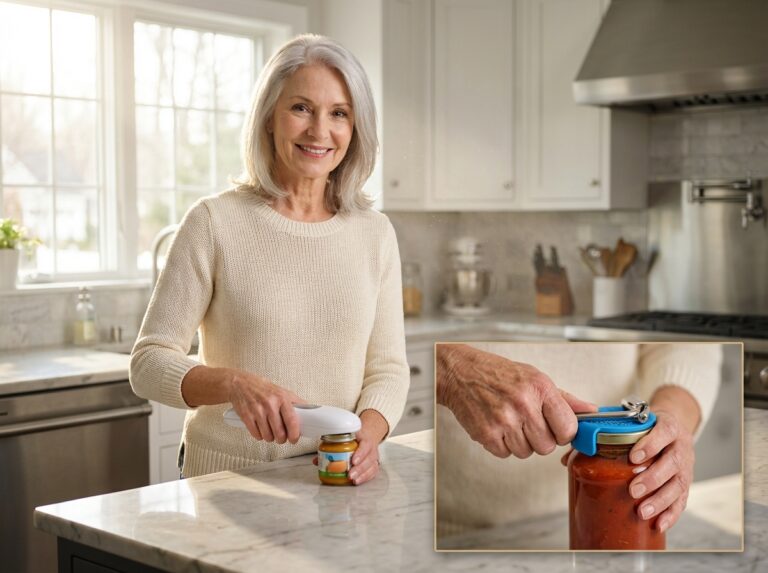
Opening jars can be a daily struggle for people with arthritis or weak hands. This guide explores how different jar openers reduce pain and effort, what features matter most, up-to-date product options and practical buying and safety tips to help you choose the right tool and stay independent in the kitchen.
Why jar openers matter for weak hands and arthritis
That stubborn, factory-sealed jar of pickles or pasta sauce can feel like an impossible challenge. For millions of people living with arthritis, hand weakness, or limited mobility, this simple kitchen task is a frequent source of frustration and pain. It’s not just an inconvenience; it’s a daily reminder of physical limitations that can chip away at one’s sense of independence. Understanding why this happens is the first step toward finding a practical solution.
The act of opening a jar requires a surprising amount of coordinated strength. It involves three key hand mechanics. First is grip strength, the power you use to hold the body of the jar steady. Second is pinch strength, the force applied by your fingers and thumb to grasp the narrow lid. Finally, there’s wrist rotation, the twisting motion, or torque, needed to break the vacuum seal. According to the Arthritis Foundation, conditions like osteoarthritis and rheumatoid arthritis directly attack the joints involved in these actions. Osteoarthritis wears down the protective cartilage in the knuckles and wrist, causing pain, stiffness, and bone-on-bone friction. Rheumatoid arthritis, an autoimmune disease, causes inflammation in the joint lining, leading to swelling, pain, and eventual joint deformity. Both conditions make gripping, pinching, and twisting intensely painful and, in many cases, impossible without causing further joint damage.
This is where a good jar opener becomes more than just a gadget. It’s an assistive tool that restores ability and safety in the kitchen. Jar openers work by fundamentally changing the physics of the task. They provide leverage, multiplying the force you apply so you don’t have to strain. Many designs clamp onto the lid, doing the difficult pinching work for you and allowing you to use the larger, stronger muscles in your arms and shoulders instead of the small, delicate joints in your hands. This significantly reduces pain and lowers the risk of injury, like a sprained wrist or a dropped glass jar. For someone experiencing a painful arthritis flare-up, the difference is profound. It’s the difference between making dinner independently and having to ask for help. Some models even enable one-handed operation, a critical feature for individuals who need their other hand for support or have weakness on one side of their body.
Choosing the right jar opener is a personal decision that depends entirely on your specific needs and abilities. Before you buy, think through how a tool’s features will work for you on both good days and bad. Here are the most important criteria to consider.
Required Grip Force
This is perhaps the most critical factor. How much squeezing or holding power does the opener require from you? Some manual openers still need you to grip a handle firmly. For someone with severe arthritis, even that can be too much. An electric model like the Robo Twist or an under-cabinet opener requires almost no grip force at all. You simply place the jar, and the tool does the work.
One-Handed Use
Consider if you often need a free hand to steady yourself or the counter. Under-cabinet models, such as the popular EZ Off Jar Opener, are designed for one-handed use. You slide the jar into the device with one hand and twist. This is a huge benefit for anyone with unilateral weakness or balance issues.
Adjustability for Lid Diameters
Jars come in all sizes, from small olive jars to large pickle jars. A good opener should be versatile. Manual openers often feature a V-shaped grip or an adjustable strap to accommodate a wide range of lid sizes. Check the manufacturer’s specifications for the minimum and maximum lid diameter it can handle, which is usually listed in inches or millimeters.
Torque or Power (Electric Models)
If you’re looking at an electric opener, its power is key. This is the rotational force it can apply to a stubborn lid. While manufacturers don’t always list a standard torque rating, user reviews are an excellent source of real-world feedback. Look for comments that mention how well the device handles tough, vacuum-sealed lids on the first try.
Weight and Handle Design
For any handheld opener, its physical design matters. Is it light enough to hold comfortably without straining your wrist? Is the handle shape ergonomic? A handle that is too thick or too thin can be difficult to grasp. According to AARP, tools with built-up, non-slip handles are often recommended because they distribute pressure more evenly across the palm, reducing stress on individual finger joints.
Non-Slip Surfaces
A secure grip on both the tool and the lid is essential for safety. Look for openers with rubber, silicone, or other high-friction materials on the handle and the part that contacts the lid. This prevents your hand from slipping on the tool and the tool from slipping on the lid, which could cause the jar to fall.
Materials and Durability
The opener should be built to last. Stainless steel teeth or gripping components are generally more durable than plastic ones. For the body, high-impact plastic is common, but check that it feels sturdy. Also, consider cleaning. Is it easy to wipe down? Are parts dishwasher safe? Food residue can build up, so easy maintenance is important for kitchen hygiene.
Power Source
For electric models, you’ll choose between battery-powered and rechargeable units. Battery-powered openers offer portability but require you to keep spare batteries on hand. Rechargeable models are more convenient and eco-friendly, but you need to remember to keep them charged.
Portability and Storage Footprint
Where will you keep your jar opener? If you have limited drawer or counter space, a compact manual gripper or a discreet under-cabinet model is a great choice. Larger countertop electric models are powerful but require a dedicated spot. If you want to take it with you when traveling, a small, lightweight manual opener is the best option.
How to choose the best jar opener and updated product shortlist
With many choices available, this guide will help you understand the key differences between models and match them to your specific needs. We’ll look at everything from simple manual grippers to powerful electric units, helping you find a solution that restores your independence in the kitchen.
Making the Right Choice for Your Hands
Your personal needs, the strength in your hands, and your kitchen setup will guide you to the best tool. Think about these factors before you buy.
Manual vs. Electric
Manual openers are simple, affordable, and always ready to use. They rely on leverage to multiply your own strength. They range from basic rubber grips to complex tools with long handles. They are great if you have moderate hand weakness and want a reliable, no-fuss option. Electric openers do all the work for you. They are ideal for individuals with severe arthritis or very limited grip strength. They cost more and require batteries or a power outlet, but they offer true hands-free operation. As noted in a review of top jar openers, electric models like the Robo Twist eliminate hand strain completely.
One-Handed vs. Two-Handed Solutions
If you need to keep one hand free to steady yourself or if you have use of only one hand, a one-handed opener is essential. Under-cabinet models are the most common type. You simply push the jar into the device and turn. Two-handed openers, which include most handheld manual and electric models, require one hand to hold the jar and the other to operate the tool. These are suitable for people who can securely hold a jar, even if their grip isn’t strong enough to twist the lid.
Compact vs. Countertop Units
Storage space is a real concern in many kitchens. Compact openers like silicone grippers or small handheld tools can be stored in a drawer. Under-cabinet openers are a great space-saver because they attach out of sight. Larger countertop electric models offer the most power but require dedicated space. Consider your kitchen layout and how often you’ll need the opener before committing to a larger unit.
Budget vs. Premium
You can find a functional jar opener for under ten dollars, like a simple silicone pad. These are great for occasional help. Mid-range manual openers, often between $15 and $30, offer better ergonomics and durability. Premium electric models can cost $50 or more but provide maximum assistance and are built to last longer. Your budget should align with how frequently you struggle with jars and the level of assistance you need.
Updated Product Shortlist for 2024
Here are top-rated models available in the US market, categorized by user needs. All information is current as of mid-2024.
For Severe Arthritis and Minimal Grip Strength
1. Black & Decker Lids Off JW250 Automated Jar Opener
Price Range: $55 – $70
Where to Buy: Amazon, Walmart, Target.
Key Specs: Weighs 2.5 lbs; fits lids up to 4.5 inches; AC powered; one-touch operation; wipes clean with a damp cloth.
Pros: Completely effortless operation; adjustable height for different jar sizes; stable countertop design.
Cons: Requires counter space; more expensive than manual options; can be noisy.
Best For: Individuals with severe rheumatoid or osteoarthritis who need a fully automated solution. It provides the highest level of torque assistance available in a home unit.
Notes: This model is an update to the long-popular JW200. User reviews suggest the motor is more durable, though the plastic housing still requires careful handling. Comes with a 2-year limited warranty.
2. RoboTwist Electric Jar Opener
Price Range: $25 – $35
Where to Buy: Amazon, The Sharper Image, medical supply stores like Wright Stuff.
Key Specs: Weighs 1 lb; fits lids from 1.2 to 3.5 inches; battery powered (2x AA); one-handed operation (after placing on jar); wipe clean.
Pros: Portable and compact; easy to use with the push of a button; requires no twisting or gripping from the user.
Cons: Slower than countertop models; may struggle with extremely tight vacuum-sealed lids; battery life can be a concern with heavy use.
Best For: Users who need electric assistance but lack counter space or want a portable option. It is often recommended for its simplicity.
Notes: Grip assistance is excellent, but torque is moderate. Durability can be an issue with the internal plastic gears if used on oversized or very stubborn lids. Typically includes a 1-year manufacturer warranty.
For One-Handed Use and Space Saving
1. EZ Off Under-Cabinet Jar Opener
Price Range: $18 – $25
Where to Buy: Amazon, Walmart, specialty kitchen stores.
Key Specs: Weighs 5 oz; fits any size lid; no power source needed; true one-handed use; maintenance-free.
Pros: Extremely effective and simple; takes up no counter or drawer space; durable V-grip design handles a wide range of lid sizes.
Cons: Requires permanent installation with adhesive and screws; may not be an option for renters.
Best For: Anyone needing a one-handed solution. As highlighted by expert testing for seniors, its design requires minimal effort once installed.
Notes: The grip assistance is very high due to the sharp steel teeth. Durability is excellent, with many units lasting for decades. Warranty is typically lifetime through the manufacturer.
For Moderate Weakness and All-Around Versatility
1. OXO Good Grips Steady-Lever Jar Opener
Price Range: $20 – $30
Where to Buy: Bed Bath & Beyond, Williams Sonoma, Amazon.
Key Specs: Weighs 10 oz; fits lids from 0.5 to 3.75 inches; manual power; requires two hands; hand wash recommended.
Pros: Ergonomic, non-slip handle; base pad stabilizes the jar on the counter; provides excellent leverage with minimal squeezing.
Cons: Can be bulky for drawer storage; requires two hands to operate.
Best For: Users with moderate arthritis who can still hold a jar steady but need help with the twisting force. The base pad is a unique feature that adds significant stability.
Notes: Provides a high level of grip assistance. The tool is well-built, but the plastic hinge can be a weak point over time. OXO offers a satisfaction guarantee.
2. Kuhn Rikon Strain-Free Gripper Opener
Price Range: $15 – $22
Where to Buy: Sur La Table, Amazon, Kuhn Rikon’s official site.
Key Specs: Weighs 4 oz; fits lids up to 3.5 inches; manual power; requires two hands; dishwasher safe.
Pros: Very simple turn-knob mechanism; locks securely onto the lid; long handle provides great leverage.
Cons: May not fit very large canning jars; requires some hand strength to turn the knob.
Best For: People who find squeezing-style openers painful. The knob-turning action uses a different set of muscles and can be easier for those with pinch-grip weakness.
Notes: Torque is moderate to high. The plastic body is sturdy, but dropping it can cause cracks. Comes with a 2-year warranty.
Practical Tips for Testing and Buying
Before you commit, it’s wise to test an opener if possible.
In-Store Trials
If you’re in a store, pick up the opener. How does the handle feel? Is it too heavy or bulky? Mimic the motion you would use to open a jar. For a manual opener, can you comfortably grip and squeeze or turn it? For an electric one, are the buttons easy to press? Don’t be shy about bringing an empty jar from home to test the fit.
At-Home Testing
Once you get it home, put it to the test right away. Try it on a variety of jar sizes, from small olive jars to large pickle jars. Does it grip the lids securely without slipping? Does it open them without excessive force on your part? Pay attention to how your hands, wrists, and arms feel during and after use. The goal is less strain, not more.
Return Policies and Guarantees
Always check the return policy before buying. Keep the original packaging until you are sure the opener works for you. Many reputable brands, like OXO, offer a satisfaction guarantee, allowing you to return the product if it doesn’t meet your needs. A good warranty is also a sign of a durable, well-made product.
Frequently Asked Questions
Will a jar opener damage the lid or the food inside?
For the most part, no. Jar openers are designed specifically to preserve the integrity of the jar and its contents. Electric models are particularly gentle, as they apply controlled, even pressure to the lid until the seal breaks. The food inside is never affected. The main consideration is the lid itself. Manual openers that use sharp, metal teeth, like the popular under-the-cabinet V-grip styles, can leave small scratches or minor dents on the lid’s surface. While this is purely cosmetic and doesn’t affect the seal for short-term storage in the fridge, the Arthritis Foundation advises that these lids should not be reused for home canning or preserving, as the damage could compromise a future airtight seal. Puncture-style openers, which are less common for arthritis, will by design make a hole in the lid, rendering it single-use. Silicone and rubber strap-style openers are the least likely to cause any cosmetic damage at all.
Are electric jar openers a safe choice for seniors? And what about in an emergency?
Safety is a top priority in the design of modern electric jar openers. Reputable models, often highlighted by AARP for their senior-friendly features, include mechanisms that automatically grip the jar, open the lid, and then release it, all with the press of a single button. They also have auto-shutoff features to prevent any motor strain or accidents. The risk of injury is extremely low, far lower than the risk of straining a wrist or dropping a glass jar while struggling with it manually. However, their reliance on power is a drawback in an emergency. A corded model is useless during a power outage, and a battery-operated one is only as reliable as its last charge. For this reason, it’s a practical idea to keep a simple, non-electric tool, like a silicone gripper pad, in a drawer as a dependable backup.
Can these openers handle everything from tiny baby-food jars to large canning lids?
Versatility varies greatly between models, so it’s important to consider the range of jars you use most often. Under-the-cabinet V-grip openers are champions of versatility, able to handle a vast range of sizes, from small vanilla extract bottles to wide-mouth pickle jars. Their simple, tapered design allows you to slide any size lid in until it catches. Handheld openers, like the strap or loop types, are also highly adjustable. In contrast, electric countertop models have a more defined operational range. For example, a popular model like the Black & Decker Lids Off Jar Opener typically accommodates lids between 1 and 4.5 inches in diameter, as stated in its user manual. This covers most common food jars but might exclude very small or oversized containers. Always check the product specifications, which are usually listed on the packaging or online product page, before you buy.
Are there jar openers designed for one-handed use or for someone with limited wrist motion?
Yes, this is where adaptive jar openers truly shine. For true one-handed operation, two types stand out. First, the under-the-cabinet models allow you to use your single hand to hold and turn the jar while the mounted opener holds the lid fast. Second, countertop electric openers do all the work for you; you simply place the jar on the base with one hand and press a button. Both of these options completely eliminate the need for wrist twisting, a major source of pain for those with arthritis. For individuals who can use both hands but have limited wrist strength or motion, ergonomic handheld openers with long, easy-to-grip handles provide excellent leverage. These tools, like the OXO Good Grips Jar Opener, are designed to multiply your force, so a gentle turn of the handle translates into a powerful twist on the lid, minimizing strain on your joints.
Is it possible to get a jar opener covered by Medicare, Medicaid, or private insurance?
This is a frequent question, but unfortunately, coverage is rare. Most insurance providers, including Medicare, classify jar openers as “convenience items” rather than essential “Durable Medical Equipment” (DME). DME is a formal category for items like walkers, wheelchairs, or hospital beds that are deemed medically necessary. However, there is a small possibility for reimbursement in specific cases. If an occupational therapist or doctor provides a formal prescription and a letter of medical necessity explaining that a particular adaptive opener is essential for you to maintain independence and perform Activities of Daily Living (ADLs), you may have a case. The process involves submitting this documentation along with your purchase receipt to your insurance provider for consideration. It’s a long shot, and you should be prepared to pay out-of-pocket, but it is always worth contacting your insurance company directly to inquire about their policy on “adaptive living aids” or “assistive devices for self-care.”
How do I clean and maintain my jar opener?
Proper care is simple and helps ensure your tool lasts. The method depends on the material and type:
- Silicone and Rubber Grippers: These are the easiest to clean. Most are top-rack dishwasher safe, or you can simply wash them in the sink with warm, soapy water. Allow them to air dry completely.
- Manual Plastic and Metal Openers: For handheld models, a quick hand wash is best. For under-the-cabinet metal openers, user manuals advise wiping the teeth with a damp cloth to remove any food residue. Avoid harsh chemicals or submerging them, as this could lead to rust.
- Electric Jar Openers: As with any electric appliance, safety is key. Consumer Reports consistently reminds users to unplug devices before cleaning. Never immerse the main housing in water. Use a soft, damp cloth to wipe down the exterior and the parts that contact the jar and lid. A mild soap solution can be used for stubborn spots, but be sure to wipe it clean with a fresh damp cloth afterward. Let it dry completely before plugging it back in.
What can I do if my jar opener fails on a really stubborn jar?
Even the best opener can be defeated by a particularly tight factory seal. When that happens, fall back on these time-tested methods:
- Break the Vacuum: The vacuum seal is the primary culprit. Turn the jar upside down and give the bottom a firm whack with the palm of your hand. Another effective method is to gently tap the rim of the lid at a 45-degree angle against a sturdy countertop. A few firm taps can be enough to break the seal. You can also use the tip of a butter knife or a spoon as a lever, gently prying at the edge of the lid until you hear a soft “pop.” Just be careful not to use too much force to avoid chipping the glass.
- Improve Your Grip: Stretch a wide rubber band around the lid’s circumference. This provides an excellent gripping surface for either your hand or your jar opener.
- Apply Heat: Run just the metal lid under hot water for about 30 seconds. The heat causes the metal to expand slightly faster than the glass, which can help loosen the seal. Dry the jar and lid thoroughly before trying again to prevent it from slipping.
What is a safe, step-by-step method for opening a jar one-handed?
Using a mounted, under-the-cabinet jar opener is the safest and most efficient way to do this. Follow these steps for pain-free, one-handed opening:
- Create a Stable Base: Place a non-slip mat or a damp cloth on the counter where you’ll be working. This small step provides crucial stability and prevents the jar from sliding.
- Position and Engage: Hold the jar in your hand and lift it up to the mounted opener. Slide the jar forward until the lid is wedged securely in the V-shaped teeth. Find the spot where it has the tightest grip.
- Use Your Body, Not Your Wrist: Grip the body of the jar firmly. Instead of trying to twist with just your wrist, use your whole arm and even your upper body to initiate the turn. Turn the jar counter-clockwise. The opener holds the lid in place, so all the force is applied exactly where it’s needed.
- Listen for Success: You will hear and feel the “pop” as the vacuum seal breaks. The resistance will lessen immediately.
- Release Safely: Gently slide the jar backward to disengage it from the opener’s teeth. Set the jar down on the non-slip mat before lifting the now-loose lid.
Final takeaways and next steps
Choosing the right jar opener is a significant step toward maintaining independence and safety in your kitchen. We’ve explored a variety of models, from simple manual grippers to powerful electric devices, each designed to solve the common and often painful problem of a stubborn lid. The best tool for you ultimately depends on your specific needs, the layout of your kitchen, and the types of jars you open most often. By moving forward with a clear plan, you can select a jar opener that not only works but becomes a reliable kitchen assistant.
If you have complex or multiple limitations, such as severe arthritis combined with limited range of motion and nerve damage, a standard consumer product might not be enough. In these cases, consulting an occupational therapist (OT) is an invaluable next step. An OT is a healthcare professional trained to help people perform daily activities safely and independently. They can conduct a thorough assessment of your hand function, wrist stability, and overall strength to recommend specialized adaptive equipment. An OT can also teach you new techniques for opening jars and performing other kitchen tasks that reduce strain and protect your joints from further damage.
A jar opener is a fantastic tool, but its effectiveness can be boosted by creating a more supportive kitchen environment. Consider incorporating these other simple aids that work well alongside your new opener.
- Non-Slip Mats
Often, the jar spinning on the counter is as much of a problem as the tight lid. A simple silicone or rubber non-slip mat placed under the jar provides a high-friction surface that holds the base steady. This allows you to focus all your energy on turning the lid, not on wrestling the jar itself. - Rubber Jar Grippers
These are flat, flexible pads, often made of silicone, that you place over the lid to get a better grip. While a good jar opener may make these redundant, they are inexpensive, small, and perfect for lids that are just slightly too tight or for opening bottles. They are also great to have on hand as a backup. - Strategic Pantry Organization
Reduce the overall strain on your hands and body by organizing your pantry and refrigerator. Keep frequently used heavy jars on counters or waist-level shelves to avoid reaching and lifting. This simple change minimizes the daily stress on your joints, leaving you with more strength and energy for tasks like opening a new jar. - Lever-Style Faucets
Twisting small, round faucet knobs can be just as difficult as opening a jar. Replacing them with single-lever faucets allows you to control water flow and temperature with a gentle push or pull using your palm or the side of your hand, saving your grip for other tasks.
As you prepare to buy, prioritize safety and practicality. Whenever possible, try to purchase from a local store where you can physically handle the different models. Independent living centers or medical supply stores often have knowledgeable staff who can offer practical advice. For more in-depth product comparisons and user reviews, online resources can be very helpful. Websites like Reviewed.com often test a wide range of products, offering insights that can guide your decision. Organizations such as the Arthritis Foundation and AARP also provide a wealth of information on adaptive tools and strategies for making daily life easier. By combining thorough research with a clear understanding of your own needs, you can find the perfect jar opener to keep you confident and independent in the heart of your home.
References
- Walmart: Product listings for multi-function jar openers.
- YouTube: Comparison of jar openers for users with a weak grip.
- Maia Midwifery: Article on ergonomic kitchen tools for seniors.
- SeniorSite.org: Expert testing and review of jar openers for seniors.
- TheEverydayKitchen.com: Reviews of jar openers for weak hands.
- Automatic Industries: Product listing for an ergonomic jar opener.
- NavigatePA.com: Information on jar gripper pads and multi-function openers.
- Reviewed.com: The Best Jar Openers of 2024.
Legal Disclaimers & Brand Notices
General Medical Disclaimer
The content provided in this article, including discussions regarding arthritis, joint pain, and the use of assistive devices, is for informational purposes only. It is not intended to be a substitute for professional medical advice, diagnosis, or treatment. Always seek the advice of a qualified healthcare provider, such as a physician or occupational therapist, with any questions you may have regarding a medical condition, chronic pain, or the suitability of adaptive equipment. Never disregard professional medical advice or delay in seeking it because of something you have read in this article.
Trademark Acknowledgement
All product names, logos, and brands mentioned in this article, including Black & Decker, RoboTwist, EZ Off, OXO Good Grips, and Kuhn Rikon, are the property of their respective owners. The use of these names, trademarks, and brands does not imply endorsement, affiliation, or sponsorship by the respective owners. References to organizations such as the Arthritis Foundation, AARP, and Consumer Reports are for informational and reference purposes only.