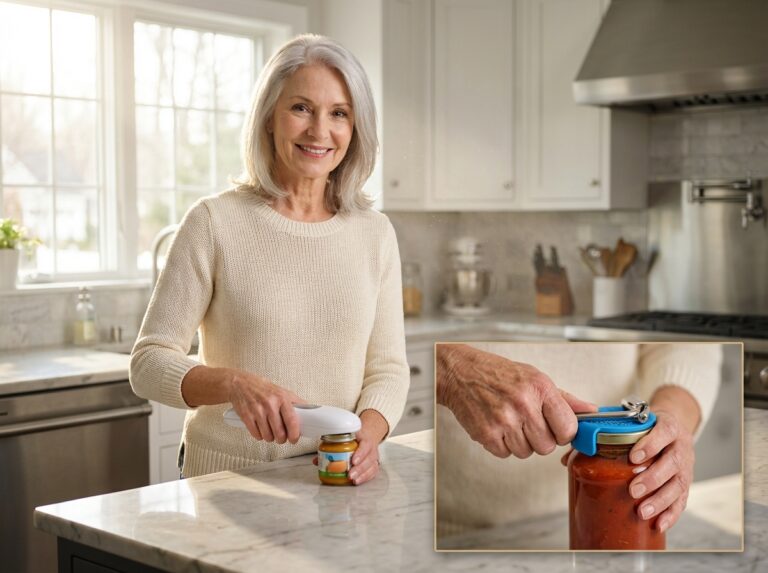
This review examines the best easy-open can openers for seniors in 2025, focusing on safety, ergonomics, and independence at home. We compare electric, manual, and adaptive ring-pull tools, outline buying criteria for arthritis and reduced grip strength, and provide practical recommendations, maintenance tips, and where to buy in the USA to help older adults choose a reliable, easy-to-use can opener.
Why specialized can openers matter for seniors
The kitchen should be a place of comfort and creativity, but for many older adults, it can become a source of daily frustration. Simple tasks that were once second nature, like opening a can of soup, can feel like major obstacles. This isn’t a personal failing; it’s a predictable result of physical changes that come with age. Arthritis is a significant factor, affecting nearly half of all Americans aged 65 and older, according to recent data from the Centers for Disease Control and Prevention. This condition causes pain, stiffness, and swelling in the joints, making the tight twisting and gripping motions required by a standard can opener incredibly difficult.
Beyond arthritis, a natural decline in grip strength is common. Studies from the National Institutes of Health show that grip strength in women over 65 can be half of what it was in their younger years. Add to this the possibility of hand tremors, which impact a growing number of seniors, or a limited range of motion from conditions like osteoarthritis, and the challenge becomes clear. Even vision impairment, affecting millions of older Americans, can make it hard to properly align a traditional opener on the can’s rim. When you factor in general fatigue, which can increase the risk of kitchen injuries, the simple act of preparing a meal is suddenly fraught with difficulty.
Using a standard, old-fashioned can opener can be more than just difficult; it can be genuinely unsafe for someone with these physical limitations. The design of these tools often requires a pincer grip and significant wrist torque, motions that can cause sharp pain for someone with arthritis. The risk of the opener slipping is high, leading to pinched fingers or dropped cans. According to the Consumer Product Safety Commission, these slips and misalignments are surprisingly common. Even more concerning are the lids. Traditional openers cut into the top of the can, creating a razor-sharp edge on both the lid and the can’s inner rim. This poses a serious laceration risk, responsible for thousands of emergency room visits among seniors each year. The frustration of struggling to align the gears or turn a stiff knob can also lead to giving up on a meal altogether, impacting nutrition and morale.
This is precisely why can openers designed with seniors in mind are so important. They aren’t just gadgets; they are essential aids for independent living. These adaptive tools are engineered to solve the exact problems that make standard openers unusable. Their primary benefit is a massive reduction in the physical effort required. Ergonomic testing shows that specialized openers can reduce the necessary grip force by as much as 80%. This is achieved through several key design features.
- Larger Levers and Handles
Instead of small, hard-to-turn knobs, you’ll find large, cushioned handles and long levers. These provide better leverage, so you don’t need to apply as much force to turn the cutting mechanism. Many handles are over 1.5 inches in diameter with a soft, non-slip grip, making them easier to hold securely. - Smooth-Edge Cutting
Many of the best adaptive openers, both manual and electric, use a side-cutting mechanism. Instead of piercing the lid, they separate the seam where the lid meets the can body. This process leaves behind a smooth, safe edge on both the can and the lid, virtually eliminating the risk of cuts. Consumer Reports tests have found this feature dramatically reduces the risk of cut injuries. The lid can often be placed back on the can for temporary storage. - One-Handed and Automatic Operation
For those with limited mobility or the use of only one hand, electric countertop models are a lifeline. Many require just a single touch of a lever to start the cutting process. The machine holds the can, turns it, and stops automatically when it’s done. This hands-free operation is a key feature for safety and convenience. You can find excellent examples in roundups like the one from Elder Savvy’s 2025 review. - Enhanced Stability
To combat issues caused by tremors or weakness, many easy-open models include stability features. Countertop electric openers often have a wide, heavy base with non-slip feet to keep them firmly in place. Some manual models are designed to clamp onto the edge of the can, providing a secure lock so you can focus on turning the handle without worrying about the device slipping off.
The benefits extend beyond the person using the opener. For caregivers, these tools can be a significant help, often reducing the time spent providing assistance with meal preparation. This frees up time and reduces the physical strain on the caregiver, allowing them to focus on other aspects of care.
Ultimately, the right can opener is a powerful tool for promoting independence and supporting the goal of aging in place. When a senior can confidently and safely prepare their own meals, it enhances their sense of self-sufficiency and well-being. Furthermore, polls from organizations like AARP have shown that a majority of seniors using adaptive tools report higher confidence in the kitchen. Removing a source of daily friction and pain prevents minor frustrations from building into a feeling of helplessness. It reduces the risk of injury, supports proper nutrition, and allows older adults to maintain their routines and dignity in their own homes.
To find the right match, it’s helpful to connect specific physical needs with key product features. Think of it as a simple checklist before you start shopping.
A Quick Guide to Matching Needs with Features
- If you have arthritis or weak grip strength
Look for a model with oversized, soft-grip handles, a large turning knob, or a one-touch electric operation. The key is a low torque or force requirement. - If you experience hand tremors
Prioritize stability. A heavy, wide-based countertop electric model is ideal. For manual options, look for one that securely locks or clamps onto the can. - If you have limited mobility or use of one hand
A hands-free countertop electric opener is the best choice. Ensure it has an easy-to-press lever or button and an automatic shut-off feature. - If you have vision impairment
Choose a model that is simple to align. Electric openers with a magnetic lid holder that guides the can into place are very helpful. High-contrast colors can also make a device easier to see and use.
How to choose the right easy-open can opener and top features to look for
Choosing the right can opener can feel overwhelming with so many options available. This guide breaks down the main types you’ll find in 2025, helping you match a tool to your specific needs. Understanding the differences is the first step toward finding a safe, reliable kitchen partner.
Manual Ergonomic Openers
These are the classic handheld openers, redesigned for comfort and less effort. They feature large, soft-grip handles and oversized turning knobs. The goal is to reduce the strain of gripping and twisting. Many now incorporate safety-edge designs that cut along the side of the can instead of the top.
- Pros
They are portable, easy to store in a drawer, and require no electricity or batteries. They offer a great sense of control. - Cons
They still demand a degree of hand strength and dexterity to grip the handles and turn the knob, which can be a challenge for individuals with severe arthritis or tremors. - Price and Warranty
Expect to pay between $15 and $35. Premium brands like OXO often come with a lifetime warranty, offering excellent long-term value. - Best For
Seniors with mild to moderate hand weakness, those with limited kitchen space, or for use during travel or power outages.
Lever-Assisted Smooth-Edge Manual Models
A smart evolution of the manual opener, these models use a lever or ratchet mechanism to advance the cutting wheel around the can. The key feature is the smooth-edge cut, which separates the lid from the side of the can without leaving a sharp edge on either the lid or the can itself. This significantly reduces the risk of cuts.
- Pros
The primary benefit is safety. The removed lid is not sharp and can often be used as a temporary cover. The lever action requires less continuous twisting motion. - Cons
There can be a slight learning curve to properly attach it to the can. Some models may require more turns to open a can compared to traditional top-cutting openers. - Price and Warranty
Typically priced from $20 to $40. Warranties range from 1 to 5 years. - Best For
Anyone concerned about safety from sharp edges, especially those with vision impairment or unsteady hands.
Full Electric Countertop Openers
These are the workhorses for a truly hands-free experience. You simply place the can under the cutting mechanism, and the machine does the rest. They come in vertical styles, where the can hangs, and horizontal or side-cut styles like the popular Hamilton Beach SmoothTouch. Many include features like automatic shutoff and a magnet to hold the lid.
- Pros
They require virtually no grip strength or manual effort. Most offer one-touch operation, making them ideal for severe arthritis or single-handed use. They are very stable. - Cons
They take up valuable counter space, require an electrical outlet, and can be noisy (around 60-75 dB). They are not portable. - Price and Warranty
Budget models start around $25, with midrange and premium models like the Cuisinart Deluxe Electric Can Opener costing between $40 and $80. They usually have a 1 to 3-year limited warranty. - Best For
Seniors with significant grip strength loss, hand tremors, or those who need to operate a can opener with one hand. Also a great aid for caregivers.
Battery-Powered Portable Openers
These compact, automatic openers sit on top of the can. With the press of a button, they travel around the rim on their own, cutting as they go. They are small enough to fit in a drawer and run on AA batteries.
- Pros
Extremely portable and space-saving. They are fully automatic, requiring only the push of a button to start and stop. - Cons
They rely on batteries, which need replacing. They can be slower than countertop electric models and may struggle with very large or heavy-duty cans. - Price and Warranty
Very affordable, usually in the $15 to $30 range. Warranties are typically for one year. - Best For
Kitchens with no spare counter space, RV living, travel, or as a simple automatic solution for those who open cans infrequently.
Automatic Cordless Openers
These are the modern upgrade to battery-powered models. They function similarly by sitting on the can and cutting automatically, but they use a built-in rechargeable battery, often charged via a standard USB-C cable. A single charge can typically open 50 or more cans.
- Pros
Combines the portability of battery models with the convenience of being rechargeable, saving money on disposable batteries. They are compact and easy to store. - Cons
You must remember to keep it charged. The initial cost is higher than disposable battery versions. - Price and Warranty
Prices range from $30 to $60. Expect a 1-year warranty. - Best For
Tech-savvy seniors, those who want an eco-friendly option, and anyone who values both portability and automation.
Ring-Pull Adapters and Multi-Tools
Not a can opener in the traditional sense, these simple tools are designed to help with cans that already have a pull-tab. They provide leverage by allowing you to hook the tool under the ring and pull back, eliminating the need to use your fingers.
- Pros
Inexpensive, small, and very effective for their specific task. Many are part of a multi-tool that can also open bottles or jars. - Cons
They only work on cans with pull-tabs and cannot open standard cans. - Price and Warranty
Usually under $20. Warranties are less common but often covered by retailer return policies. - Best For– Anyone who primarily buys soup, tuna, or pet food in pull-tab cans but finds the rings difficult or painful to lift.
Feature Checklist for Comparing Can Openers
When you’re ready to shop, use this checklist to evaluate your options.
- Grip Diameter and Material
For manual openers, look for handles with a diameter between 1.2 and 2 inches, made of soft, non-slip rubber or silicone to cushion your grip. - Required Grip Force or Torque
The less force needed, the better. Electric models require almost none. For manual models, a larger turning knob provides more leverage and reduces the torque required. - One-Handed Operation
Essential for individuals with unilateral weakness or those who need their other hand to steady themselves. This is a key feature of most countertop electric models. - Cutting Method
Decide between traditional top-cutting, which can leave sharp edges, and side-cutting (smooth-edge), which is significantly safer. - Power Source
Choose between a corded AC model for reliable power, a battery-operated one for portability, or a rechargeable one for a balance of both. - Noise Level
If you are sensitive to noise, be aware that electric models operate at around 65 decibels. Manual openers are silent. - Countertop Footprint and Storage
Consider your kitchen space. Countertop models need a dedicated spot, while manual and portable openers fit easily in a drawer. - Cleaning and Maintenance
Look for models with a removable cutting assembly that is dishwasher-safe. This makes cleaning much easier and more hygienic. - Anti-Slip Feet
For countertop models, sturdy, non-scratch rubber feet are crucial to keep the unit stable during operation. - Available Spare Parts
Check if the manufacturer sells replacement parts, like cutting blades. This can extend the life of your appliance significantly.
Testing a Can Opener in Person
If possible, try a few models in a store. For a manual opener, hold it in your hand. Does the grip feel comfortable? Mimic the turning motion. Does the knob feel easy to turn? For an electric model, assess its weight and stability. Press the activation lever. Is it easy to push and hold? Evaluating the physical interaction will tell you more than any online description.
Safety Tips for First-Time Use
Always unplug an electric can opener before cleaning it or trying to dislodge a stuck can. With a new manual opener, go slowly the first few times to get a feel for how it attaches and cuts. For caregivers, demonstrate the proper use to the senior and place the opener in an easily accessible location. Ensure the cord on electric models is tucked away to prevent a tripping hazard.
To help you make a final decision, the article will now present our curated picks for 2025. These recommendations will cover categories such as Best Overall Electric, Best Smooth-Edge Manual, Best for Severe Arthritis, Best Portable, Best Budget, and Best Heavy-Duty. Each recommendation will include a brief explanation of why it was chosen, its approximate price, and where you can purchase it in the USA from major retailers like Amazon, Walmart, and Target, as well as medical supply sources. Before making a purchase, it is always wise to verify the latest product specifications and warranty information directly with the manufacturer, as models and features can be updated throughout the year.
Frequently Asked Questions about easy-open can openers for seniors
Navigating the world of kitchen gadgets can be overwhelming. After covering how to choose an opener, we know you still have practical questions. Here, we’ve gathered the most common queries from seniors, families, and caregivers to give you clear, straightforward answers about finding and using the perfect easy-open can opener.
What is the safest type of can opener for seniors?
The safest choice is an electric, smooth-edge can opener. These models cut the can from the side, which eliminates sharp edges on both the lid and the can. This design dramatically reduces the risk of cuts. The lid can be lifted off without touching any jagged metal. Electric operation also adds safety by requiring minimal physical force, reducing the chances of the opener slipping or causing a strain-related injury. For anyone concerned about kitchen accidents, a smooth-edge electric model provides the most peace of mind.
Why should I choose an electric can opener over a manual one if I have limited strength?
An electric can opener does almost all the work for you. If you live with arthritis or a weakened grip, turning a manual knob can be painful. Electric openers can reduce the required grip force significantly. You simply position the can and press a lever or button, and the machine takes over. This preserves your energy, prevents pain in your hands and wrists, and makes meal preparation a much more manageable task. It’s a simple switch that makes a big difference in maintaining kitchen independence.
Are smooth-edge can openers really safer for my hands and the food inside?
Yes, they are safer in two important ways. For your hands, they create a smooth, touchable rim instead of a razor-sharp edge. This virtually eliminates the risk of getting cut. For your food, the cutting mechanism works on the outside of the can, so the lid never falls into the food. This prevents any dust or residue from the top of the can from contaminating your meal. The FDA has approved this design as food-safe, and the smooth lid can often be placed back on the can to cover leftovers for a short time.
How do I choose the best can opener for arthritis or hand tremors?
For arthritis, focus on models that eliminate twisting and tight gripping, such as one-touch electric openers or manual versions with thick, cushioned handles. For hand tremors, stability is the priority, making a heavy, wide-based countertop electric model with can-clamping features the ideal choice.
Can these easy-open devices handle large or commercial-sized cans?
Most countertop electric openers are versatile. The top-rated models for 2025 can easily handle a wide range of can sizes, from small 6-ounce cans to large 28-ounce cans. Some heavy-duty models can even open #10 cans. However, it is always a good idea to check the product’s specifications before you buy. The manufacturer will list the maximum can height and diameter the opener can accommodate. Portable battery-powered models may struggle with the weight of very large cans.
Are battery-powered can openers reliable, and what about charging?
They have become very reliable for everyday use. A good quality battery-powered opener can typically open over 50 cans with a single set of four AA batteries; we recommend using lithium batteries for the best performance. Some newer cordless models are rechargeable, often using a standard USB-C cable. A full charge usually takes two to three hours. Their main advantage is their small size and portability, making them perfect for kitchens with limited counter space or for travel.
How should I clean and maintain my easy-open can opener?
Proper cleaning is simple and important. First, always unplug an electric opener before you clean it. The main body of the opener should be wiped down with a soft, damp cloth. Never submerge the main housing in water. Many of the best models feature a removable cutting assembly. This part can often be detached and washed in warm, soapy water or placed in the dishwasher. Always check your user manual for specific instructions. Keeping the cutting wheel clean ensures it works smoothly.
Are replacement parts, like blades, available for these openers?
This depends on the manufacturer. Well-known brands like Cuisinart and OXO often make replacement parts available to extend the life of their products. You can usually find a new cutting wheel on the company’s website for under $10. For many budget or unbranded models, replacement parts are not available. If you want a device that will last for many years, choosing a brand known for its customer support is a wise investment.
Where can I buy these in the USA, and are there senior discounts available?
You can find a wide selection at major retailers like Walmart, Target, and Amazon. For more specialized models, check with medical supply stores or websites that focus on aids for daily living. When it comes to discounts, it’s always worth asking. AARP members can access discounts at many retailers, and some stores have dedicated senior discount days. For more ideas on top-rated models, you can check out comprehensive reviews like this one from Bob Vila.
Do these devices require any professional installation?
No, they do not. Ease of use starts right out of the box. Countertop electric models are “plug-and-play.” You just place it on your counter and plug it into a standard outlet. Manual and battery-operated models are even simpler, requiring no setup other than inserting batteries if needed. There are no complicated instructions or tools required, making them accessible for everyone.
What should I do if my can opener jams or starts stripping the lid?
If your opener gets stuck, first stop and unplug it if it’s electric. A jam can sometimes be cleared by gently reversing the cutting action or manually releasing the clamp lever. Jams often happen with badly dented cans. If the opener is spinning but not cutting, the can may be misaligned. Reposition it to ensure the rim is firmly seated against the drive gear. If the problem continues, the cutting blade might be dull or clogged. Clean it thoroughly. If that doesn’t work, it may be time to replace the blade.
How do I assess the warranty and return policies before buying?
A good warranty is a sign of a quality product. For electric models, look for at least a one-year warranty; top brands like Cuisinart often provide three years. For manual openers, some companies like OXO offer a lifetime guarantee. When purchasing, check the return policy. Retailers like Amazon and Walmart typically offer a 30-day return window, which gives you time to try the opener at home. If it doesn’t work as expected, you can return it. Reading the warranty details is always a smart final step.
If you have significant challenges with hand strength or dexterity, consider consulting an occupational therapist. They can provide a professional evaluation and recommend specific adaptive tools tailored to your unique needs.
Conclusion and next steps for choosing the best opener
Navigating the world of kitchen gadgets can feel overwhelming, but finding the right can opener is a decision that pays dividends in safety and convenience every single day. After exploring the top models of 2025 and breaking down the features that matter most, the final step is to connect that information to your unique needs. This isn’t about finding a single “best” opener for everyone; it’s about identifying the perfect tool that makes your time in the kitchen safer, more comfortable, and more independent. Think of this as your final checklist to move from reading reviews to confidently making a choice.
Let’s synthesize the key decision factors into a clear path forward. Your personal needs should guide every step, turning a broad selection into a shortlist of ideal candidates.
- Ergonomics Above All Else. This is the most critical factor. Before you consider anything else, think about your hands. Do you experience stiffness from arthritis? Is your grip strength less than it used to be? Do tremors make precise movements difficult? If so, prioritize features like oversized, cushioned handles (at least 1.5 inches in diameter is ideal) and large, easy-to-turn knobs on manual models. For those with significant strength or dexterity limitations, an electric opener that requires only a simple press of a lever or button is almost always the superior choice. The goal is to find a tool that works with your body, not against it, requiring minimal force and no painful twisting motions.
- Cutting Style and Safety. The choice between a traditional top-cut opener and a smooth-edge side-cut model is a major safety consideration. Traditional openers leave behind a dangerously sharp lid and a sharp rim on the can itself, responsible for thousands of emergency room visits each year. Smooth-edge openers, by contrast, cut along the side of the can’s seam, leaving a dull, touchable edge on both the lid and the can. This virtually eliminates the risk of cuts. For peace of mind and safer handling and disposal, a smooth-edge model is highly recommended. Many even come with built-in pliers to lift the lid off cleanly, so you never have to touch it.
- Power Source and Your Kitchen Routine. How you get your power determines where and how you can use the opener. Countertop electric models are the champions of hands-free operation. They are stable, powerful, and ideal for anyone who opens cans regularly in the same spot. Their only drawback is their reliance on an outlet and the counter space they occupy. Battery-powered openers offer the best of both worlds, providing motorized cutting power in a compact, portable design that fits in a drawer. The 2025 models are impressively efficient, often opening 50 or more cans on a single set of batteries. Manual openers remain a reliable, powerless option, perfect for emergency kits, RVs, or those who prefer a simple, traditional tool, provided they have the necessary hand strength.
- Footprint and Storage. Your kitchen layout matters. A large, stable countertop opener like the Cuisinart Deluxe or Hamilton Beach SmoothTouch is fantastic, but only if you have the dedicated space for its typical 6x6x10 inch footprint. If your counter space is at a premium, a compact battery-powered model or a manual opener that tucks neatly into a drawer is a more practical solution. Measure your available space before you fall in love with a particular model.
- Maintenance and Durability. A good tool should be easy to care for. Look for openers with removable cutting heads that are dishwasher-safe. This makes cleaning simple and hygienic. For manual models, check if the manufacturer, like OXO, offers replacement blades, extending the life of your purchase. A sturdy build of stainless steel and durable plastic is a good indicator of longevity.
- Price as an Investment. While prices vary, think of this purchase as an investment in your daily well-being. Manual ergonomic openers typically range from $15 to $30. Battery-powered and budget electric models fall in the $20 to $40 range, while premium, feature-rich countertop electrics can cost between $40 and $80. The right tool prevents frustration and potential injury, making it well worth the cost.
With these factors in mind, you’re ready to take concrete next steps toward making your purchase.
Your Action Plan for Choosing the Right Opener
- Create a Shortlist of Two or Three Candidates. Based on your self-assessment, narrow your focus. Don’t try to compare ten different openers. Instead, pick a few distinct styles that seem like a good fit. For example, your shortlist might be: 1) A top-rated countertop electric like the Cuisinart Power Cut Series Can Opener for its effortless operation, 2) an ergonomic smooth-edge manual like the OXO Good Grips for its simplicity and safety, and 3) a portable battery-powered model for its convenience. This focused approach makes the final decision much easier.
- Test and Verify Before You Buy. Whenever possible, try a model in person. Retailers like Target or Walmart often have floor models you can handle. Feel the weight. Test the grip. See if the knob turns smoothly. If you’re buying online, do your due diligence. Visit the manufacturer’s website to confirm the specifications for the current 2025 model, as features can change. Read recent customer reviews, paying close attention to comments from users with similar needs to your own.
- Review the Warranty and Return Policy. A strong warranty is a sign of a manufacturer’s confidence in its product. Brands like OXO are famous for their lifetime guarantees on manual tools, while Cuisinart typically offers a solid three-year warranty on electrics. Equally important is the return policy. Purchase from retailers known for customer-friendly, hassle-free returns, such as Amazon, Walmart, or Bed Bath & Beyond. This gives you a risk-free period to test the opener in your own kitchen and ensure it truly works for you.
- Consult a Professional for Specific Needs. If you contend with significant physical limitations from severe arthritis, Parkinson’s disease, or recovery from a stroke, an occupational therapist (OT) can be an invaluable resource. They are experts in adaptive equipment and can perform a functional assessment of your hand strength and dexterity to recommend a device perfectly suited to your abilities. Their guidance can prevent the frustration of trial and error.
Making a thoughtful choice about a seemingly small tool like a can opener is a powerful act of self-care. It’s a practical, impactful change that directly supports your independence, enhances your safety in the kitchen, and removes a common point of daily frustration. The right opener empowers you to continue preparing the meals you love with confidence and ease.
Sources
- The Best Can Openers for Seniors, Vetted and Reviewed – Bob Vila — For older cooks who don't want to clutter their countertop, this Kitchen Mama battery-powered can opener is compact, portable, and easy to use.
- Hunting For The Best Can Opener 2025 – Chris Loves Julia — I have to give the nod to the Cuisinart Power Cut Series Can Opener. There's a reason it's one of the top sellers on Amazon!
- Best Can Opener? I Tested OXO, KitchenAid, Kuhn Rikon & More — You know when I was much younger, I used to be fun. Now I watch can opener reviews.
- 6 Best Can Openers for Seniors in 2025: Tested & Reviewed — The Cuisinart Deluxe Electric Can Opener is our top pick because it balances ease of use, sturdiness, and price. When we tested it, the one- …