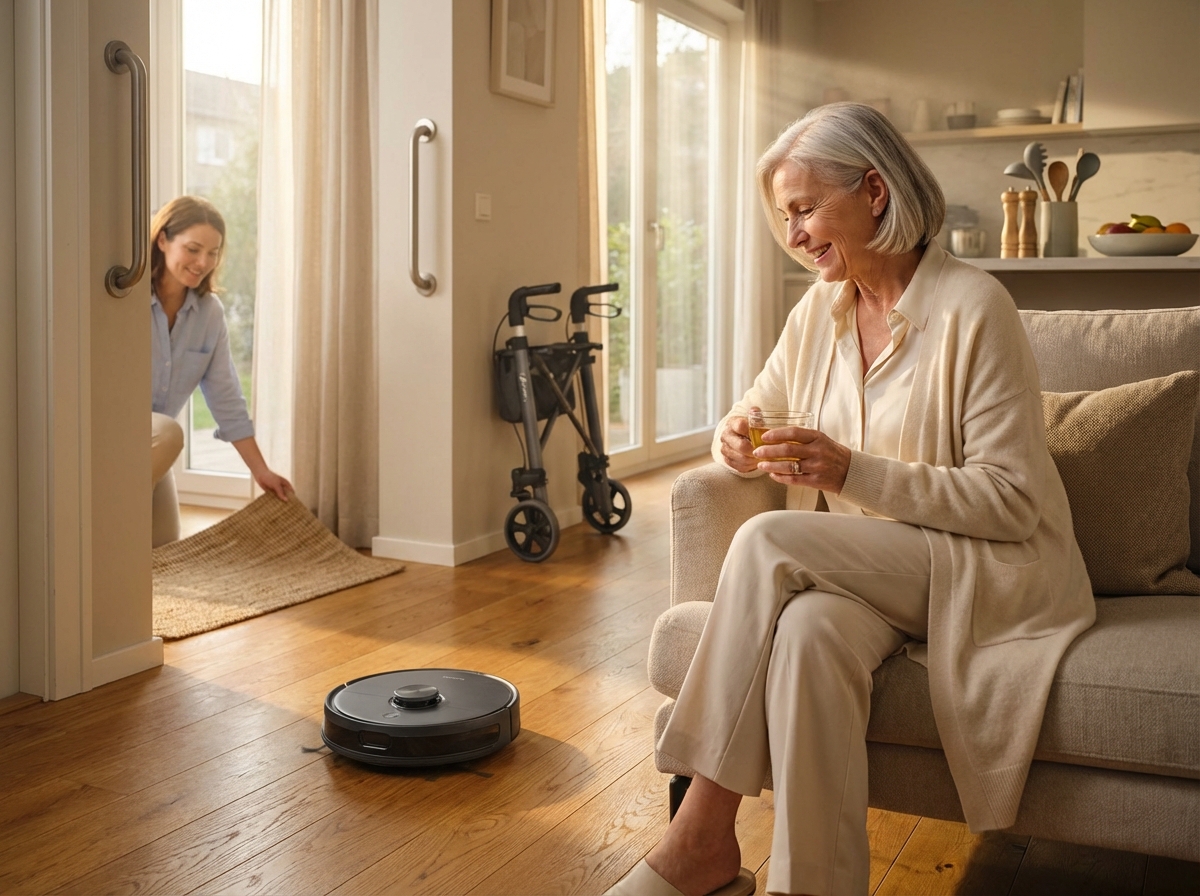
Robot vacuums can reduce daily housework and support seniors who want to remain independent at home. This article explores why they help, which features matter for older adults, how to choose models that prioritize ease of use and safety, setup and maintenance guidance, and final recommendations for caregivers and seniors in the USA.
Why Robot Vacuums Help Seniors Live Independently
The Physical Relief of Automated Floor Care
Maintaining a home becomes a different kind of challenge as we get older. Tasks that used to feel like a quick warm up can start to feel like a heavy workout. Vacuuming is one of those chores. It requires a lot of repetitive movement. You have to push a heavy machine. You have to pull it back. You have to bend down to reach under the coffee table. For someone dealing with arthritis or chronic back pain, these movements are more than just annoying. They can cause real physical setbacks. Robot vacuums for seniors offer a way to skip this strain entirely. These devices handle the daily floor maintenance without requiring any manual labor from the user. This shift helps people keep their energy for things they actually enjoy doing.
The weight of a standard upright vacuum is often overlooked. Many models weigh between 15 and 20 pounds. Lugging that up a flight of stairs or even just pushing it across a thick carpet puts a lot of pressure on the shoulders and the lower back. By using assistive cleaning devices, older adults can avoid the risk of overexertion. The robot does the heavy lifting. It moves itself across the floor. It navigates around furniture. It returns to its base to charge. This autonomy means the user does not have to engage in the physical tug of war that comes with traditional cleaning tools.
Reducing Fall Risks and Improving Home Safety
Safety is the most important part of aging in place. Falls are a leading cause of injury for seniors in the United States. Traditional vacuuming creates several hazards. Power cords are a major trip risk. They stretch across hallways and get tangled underfoot. A robot vacuum is cordless. It operates on a battery and stays low to the ground. This eliminates the danger of tripping over a long yellow cord while trying to clean the living room. Keeping the floors clear of small debris also helps. Crumbs, pet hair, and small pebbles can make hard floors slippery. A robot that runs every day ensures these small hazards are gone before they become a problem.
Many modern units come with advanced sensors. These sensors detect stairs and ledges. This prevents the machine from falling down a flight of stairs. It also means the senior does not have to worry about the machine causing a mess or a hazard in the middle of the night. The aging in place robot vacuum is designed to be a set and forget tool. It works in the background. It keeps the environment predictable and safe. This predictability is vital for people who might have vision issues or balance concerns.
Health Benefits and Allergy Management
Indoor air quality has a direct impact on respiratory health. Dust and pet dander settle into carpets and corners very quickly. If a senior has allergies or asthma, a dusty home can lead to frequent flare ups. It is hard to keep up with dust when manual vacuuming is painful. A robot vacuum can be scheduled to run every single day. This consistency is something most people cannot achieve with a manual vacuum. It prevents the buildup of allergens. Many high end models now include HEPA filters. These filters trap tiny particles that would otherwise be blown back into the air. This leads to a much cleaner breathing environment.
The robotic vacuum cleaners market is growing because people see the health value in these machines. In 2025, we are seeing more focus on how these tools help with indoor air quality. For seniors with pets, the benefit is even higher. Pet hair can accumulate in hours. A robot that patrols the floor daily keeps the dander levels low. This reduces the need for deep cleaning sessions that are physically demanding.
Support for Caregivers and Family Members
Caregiving is a demanding role. Family members often spend their visits doing chores instead of spending quality time with their loved ones. If a daughter or son spends an hour vacuuming every time they visit, that is an hour of lost conversation. A robot vacuum gives that time back. It handles the floor care throughout the week. This means the home stays in good shape between visits. The Robot Vacuum Cleaners Market report shows that residential buyers make up the vast majority of users. This is because the time savings are real and measurable.
Caregivers can often monitor these devices through an app on their own phones. They can see if the vacuum finished its job. They can get an alert if it gets stuck. This provides peace of mind without needing to be physically present every day. It turns a daily chore into a background process that requires very little oversight.
Home Layouts and Practical Expectations
Not every home is a perfect fit for a robot vacuum. These machines work best in certain environments. Single level apartments are the ideal scenario. There are no stairs to worry about. The robot can reach every room without help. Small homes with open floor plans also benefit greatly. If a home has a lot of hardwood or tile, the robot will be very efficient. Easy-to-use vacuums for elderly users are most effective when the floor is relatively clear of clutter. If there are many loose rugs or piles of magazines on the floor, the robot might struggle. Regarding thresholds between rooms, most modern units can climb over small bumps or transition strips up to about three-quarters of an inch. If a home has higher transitions, a small rubber ramp may be necessary to allow the robot to move freely.
| Living Situation | Benefit Level | Considerations |
|---|---|---|
| Single-Level Apartment | High | Best for total autonomy |
| Multi-Level Home | Medium | Requires carrying between floors |
| Homes with Pets | High | Reduces daily dander buildup |
| High-Pile Carpets | Low | May require a more powerful motor |
There are limitations to keep in mind. A robot vacuum will not replace a deep clean. It cannot reach high cobwebs or clean the upholstery on a chair. It also requires some maintenance. The dustbin needs to be emptied. The brushes need to be cleared of long hair. However, many models in 2025 feature self emptying bases. These bases can hold weeks of dust. This reduces the maintenance tasks for the senior significantly. The U.S. household vacuum cleaner market is shifting toward these automated solutions because they solve the most frequent cleaning problems with the least amount of human effort.
Emotional and Mental Well-being
Living in a clean environment feels good. It reduces stress. For many seniors, the inability to keep up with housework can be frustrating. It can feel like a loss of control. Having a clean floor every morning provides a sense of order. It makes the home feel manageable. This emotional boost is hard to measure but very real. When the sun hits the floor and there are no dust bunnies in sight, the home feels more welcoming. This helps seniors feel more confident in their ability to live independently. It removes one more item from the long list of things they have to worry about each day. The mental clarity that comes from a tidy space is a huge part of why these machines are becoming a staple in senior living.
Key features to prioritize for seniors and caregivers
Choosing the right assistive technology requires a focus on specific hardware and software details that cater to the unique needs of older adults. The Robotic Vacuum Cleaners Market Size 2025 to 2035 report indicates that the industry is moving toward more autonomous systems. This shift is particularly beneficial for those who want to maintain a clean home without the physical burden of traditional cleaning. When evaluating different models, certain technical specifications directly impact how much a senior will actually benefit from the device.
Physical Interface and Ease of Use
Onboard Controls and Tactile Buttons
Many modern appliances rely entirely on smartphone apps. For a senior-friendly home tech experience, a robot should have large, high-contrast physical buttons on the top of the unit. These buttons allow a user to start, stop, or send the vacuum back to its dock without opening a phone. Tactile feedback is important for those with reduced sensation in their fingertips or visual impairments. A single, prominent “Clean” button is often the most used feature for daily operation.
Voice Assistant Integration
Compatibility with Amazon Alexa or Google Assistant provides a hands-free way to manage housework. A senior can simply say a command to start a cleaning cycle. This feature is a core part of the Robotic Vacuum Cleaner Market Size, Growth Report 2030 trends. It eliminates the need to bend down or navigate complex digital menus. Voice prompts from the robot itself are also helpful. Instead of blinking lights or cryptic beeps, a robot that speaks clearly to announce it is “Starting cleaning” or “Stuck near a rug” provides much better clarity.
Automation and Maintenance Reduction
Auto-Empty Stations
The most significant advancement for seniors is the automatic emptying system. Traditional robot vacuums have small bins that require emptying after every run. This task involves fine motor skills and frequent bending. An auto-empty dock pulls debris into a larger bag that only needs changing every 60 days. This reduces manual maintenance significantly. Look for docks that use sealed bags to prevent dust from escaping into the air during the transfer process.
Tangle-Free Brush Systems
Maintenance comfort is a priority. Older brush designs often get tangled with hair or carpet fibers, requiring the user to use scissors or small tools to clean them. Modern tangle-free or rubberized rollers prevent hair from wrapping tightly around the core. This makes the occasional cleaning of the vacuum much easier for someone with arthritis or limited hand strength. Washable filters are another practical feature. They can be rinsed under a tap instead of requiring frequent, expensive replacements.
Safety and Navigation Sensors
Advanced Obstacle Avoidance
Safety is the primary concern when introducing a moving device into a living space. High-end models use LiDAR or camera-based sensors to detect objects in real-time. This prevents the robot from getting stuck on power cords, shoes, or pet waste. Crucially, these sensors help the robot detect mobility aids; most advanced units will slow down or stop before touching a walker or cane. For seniors, this means they do not have to “pre-clean” the floor by picking up every small item before the robot starts. Reliable obstacle detection reduces the chance of the robot becoming a trip hazard in the middle of a hallway.
Cliff Sensors and Mapping
Cliff sensors are standard but essential. They prevent the unit from falling down stairs. Advanced mapping allows the creation of no-go zones. These virtual barriers are set up in the app to keep the robot away from delicate areas like plant stands or cluttered hobby corners. This level of control ensures the robot stays in safe zones without the need for physical magnetic strips on the floor.
Performance and Environment
Noise Levels and Quiet Modes
The sound of a vacuum can be disruptive or even distressing for some individuals. Look for models with noise levels between 55dB and 65dB. This is roughly the volume of a normal conversation. Many units offer a “Quiet Mode” or “Do Not Disturb” settings. These ensure the robot does not start a scheduled clean during nap times or late at night. Consistent cleaning is easier to tolerate when the machine operates at a low hum.
HEPA Filtration and Air Quality
For households with allergies, high-efficiency particulate air (HEPA) filters are necessary. These filters trap 99.97 percent of dust, pollen, and pet dander. Since robot vacuums stir up very little air compared to upright vacuums, they are excellent for maintaining indoor air quality. This is a vital feature for seniors with respiratory sensitivities.
User Profiles and Feature Priorities
Different living situations require different feature sets. The following table outlines which specifications to prioritize based on the user’s lifestyle.
| User Profile | Top Priority Features | Why It Matters |
|---|---|---|
| Highly Independent Seniors | Mapping, No-Go Zones, High Suction | Allows for customized cleaning of specific rooms without manual intervention. |
| Limited Mobility or Caregiver Assisted | Auto-Empty Dock, Voice Control, Remote App Access | Minimizes physical interaction. Caregivers can monitor the robot from their own homes. |
| Households with Pets or Allergies | HEPA Filtration, Tangle-Free Brushes, Wet-Mop Combo | Manages pet hair and dander effectively while keeping hard floors sanitized. |
Privacy and Security Considerations
Modern robot vacuums collect data to create maps of the home. This information is often stored in the cloud. It is important to choose brands with strong privacy reputations. Some models offer local processing, meaning the maps stay on the device rather than being uploaded. Caregivers should ensure that app accounts use strong passwords and two-factor authentication. This protects the privacy of the senior while still allowing the caregiver to check the cleaning history or start a cycle remotely. These easy robot vacuum features provide peace of mind for the whole family.
The best robot vacuums for elderly users balance high-tech performance with a low-stress user experience. While the initial cost of premium models with auto-empty docks and LiDAR might be higher, the reduction in daily chores and the increase in safety make them a worthwhile investment for aging in place. Replacement parts like brushes and filters are usually available through major retailers. Typical annual costs for these supplies range from $50 to $100. Subscription services for bags and filters can further simplify the process by delivering supplies exactly when they are needed.
How to choose and set up an easy-to-use model in the USA
Choosing the right robot vacuum requires a clear plan. The market offers many choices, but not all are a good fit for an older adult. This robot vacuum buying guide 2025 helps narrow down the best options based on specific needs and living situations.
Finding the Right Model for Your Home
Budget under $300
These models provide basic suction. They require the user to empty the dustbin manually after every run. They work best for small apartments with hard floors. They often lack advanced mapping features.
Budget $300 to $700
This range includes self emptying bases. These are often the best robot vacuum for seniors 2025. They hold debris for weeks. They use laser mapping to avoid getting lost. This reduces the need for frequent bending.
Budget over $700
Premium models include mop washing. They have the best obstacle avoidance. They are ideal for large homes with pets. These models offer the most independence for users with limited mobility.
Special Needs Considerations
Pet owners should look for tangle free rubber brushes. Allergy sufferers need models with HEPA filtration. For those with mobility impairments, voice control is a priority. A senior-friendly robot vacuum should minimize the physical effort required for maintenance.
Step by Step Setup and Optimization
Unboxing and Home Preparation
Keep the original box for at least thirty days. Most US retailers require it for returns. Clear the floors of loose items. Pick up thin charging cables. Secure loose rug tassels with double sided tape. Use cord covers for permanent lamp wires. This prevents the robot from getting stuck or causing a trip hazard.
Charging Dock Placement
Place the dock on a hard, level surface. Ensure there is three feet of open space in front of it. Keep eighteen inches of space on both sides. This helps the robot find its way home without frustration. Avoid placing the dock in a dark corner or behind a door.
Mapping the First Run
Open all doors to rooms the robot should clean. Turn on the lights. Pick up any temporary clutter. Let the robot explore the entire floor. This creates an accurate map. Use the app to set virtual no go zones around delicate furniture or messy cable areas.
Connecting to Wi-Fi and Voice Assistants
Connect the robot to the home network. Most models use the 2.4GHz frequency. Link the robot to an Amazon Alexa or Google Home device. This allows for simple voice commands like “start cleaning.” Share the app login with a caregiver. They can monitor the robot or change schedules from their own phone.
Training the Household
Everyone in the home must learn a few new habits. Do not leave socks or small pet toys on the floor. Check for spills before the robot starts. If the robot has a mop, ensure the water tank is full. These small steps keep the machine running without errors. Consistency is the key to a clean home.
Maintenance and Support in the USA
| Task | Frequency |
|---|---|
| Empty Dustbin | After every use or monthly with a dock |
| Clean Sensors | Every two weeks |
| Wash Filter | Every month |
| Replace Brushes | Every six to twelve months |
Battery Care Tips
Keep the robot on the charger when it is not in use. Avoid letting the battery drain to zero percent. If the robot will not be used for a month, charge it to fifty percent and turn it off. This preserves the battery life over several years. Most major brands design their batteries to be user-replaceable with a simple screwdriver if they start losing capacity after two to three years.
Purchasing and Support Considerations
The Vacuum Cleaners – United States | Statista Market Forecast shows a growing market with many options. Costco offers an excellent return policy. Amazon has the widest selection. Best Buy provides in person support. Check Consumer Reports for independent testing data. Most manufacturers offer a one year warranty. Look for brands with US based phone support for easier troubleshooting.
Top Model Recommendations for 2025
iRobot Roomba Vac Essential
This budget model is very straightforward. It uses a single button to start. It does not have a self empty base. It requires the user to empty the bin manually after each run. It is a reliable choice for simple needs.
Roborock Q5 Pro Plus
This midrange option is a great senior-friendly robot vacuum. It includes a dock that empties the dustbin automatically. It uses lidar to map the home quickly. It works well on both carpets and hard floors. The Robotic Vacuum Cleaners Market Size 2025 to 2035 report notes that these midrange models are becoming the most popular choice for residential users.
Roborock S8 MaxV Ultra
This premium model is for those who want a hands off experience. It vacuums. It mops. It cleans its own mop with hot water. It has a voice assistant built directly into the robot. It avoids small objects like shoes or pet waste with high accuracy.
iRobot Roomba j9 Plus
This model is perfect for homes with pets. It identifies and avoids pet waste. It has high suction power. It uses rubber brushes that resist hair tangles. It is very effective at removing fur from deep carpets.
Ecovacs Deebot T30S
This hybrid model handles mopping and vacuuming. It has a compact station. It uses high temperature water to sanitize floors. It is a solid choice for kitchens and bathrooms where mopping is needed frequently.
Verifying Current Specs
Always check the manufacturer website for the latest firmware updates. New software can improve navigation or battery life. Read recent customer reviews on major US retailers to see how the model performs in real homes. This ensures the chosen model meets the current standards for 2025.
Results and next steps for choosing the right robot vacuum
Moving toward a cleaner home with less physical effort is a significant step for any senior. The current landscape of home technology has changed. By the end of 2025, the robotic vacuum cleaners market has reached a value of over 11 billion dollars. This growth reflects how these machines have transitioned from luxury gadgets into essential tools for independent living. In the United States alone, the household vacuum market is projected to grow steadily as more people seek time saving solutions. For older adults, this technology offers a way to maintain a tidy environment without the strain of pushing a heavy upright vacuum or bending to reach under furniture.
Assess your specific home environment
The first step in choosing a model is a thorough walk through of your living space. You should look at the types of flooring in each room. If you have thick area rugs, you need a vacuum with high clearance and strong suction. Measure the space under your bed and sofa to ensure the robot can fit. You should also identify potential obstacles like loose power cords or low furniture legs. Knowing these details helps you avoid buying a machine that will constantly get stuck. It ensures the model you pick can navigate your specific layout without needing constant rescue.
Shortlist two or three models based on priority features
Focus on models that fall within the mid range price bracket of three hundred to seven hundred dollars. This segment currently makes up over half of the market because it balances cost with useful features. Look for robots that offer simple physical buttons if you are not comfortable using a smartphone app. Prioritize features like “recharge and resume” which allows the robot to finish a job after a battery boost. You should also look for models with large dustbins or automatic emptying bases. These features reduce the amount of physical maintenance you have to perform each week.
Test the device using retailer return policies
Buying a robot vacuum is an investment in your comfort. You should purchase from a retailer that offers a clear return window of at least thirty days. This period allows you to test the machine in your actual home environment. You can see how it handles your transitions between hardwood and carpet. You can also check if the noise level interferes with your hearing aids or daily rest. If the setup process feels too complicated or the machine misses certain areas, you can return it. Testing the device at home is the only way to be sure it truly reduces your workload.
Decision Checklist for Seniors
Before making a final purchase, review these essential points to ensure the model fits your lifestyle.
| Feature | What to Check |
|---|---|
| Physical Height | Does it fit under your lowest piece of furniture? |
| Bin Capacity | Is the dustbin easy to remove and empty? |
| Navigation | Does it have sensors to prevent falling down stairs? |
| Control Options | Can it be started with a simple remote or button? |
| Noise Level | Is the decibel rating low enough for your comfort? |
Safety and Maintenance Commitments
While these machines are autonomous, they still require some attention to remain safe and effective. You must keep the floor clear of small objects like loose socks or charging cables. These items can tangle in the brush roll and cause the machine to stop abruptly. It is also important to wipe the cliff sensors with a dry cloth once a month. This prevents the robot from accidentally tumbling down steps. If you choose a model without a self emptying base, you will need to empty the bin after every two or three cleaning cycles. Regular maintenance keeps the air quality in your home high and extends the life of the appliance.
Finding Ongoing Support
You do not have to figure everything out on your own. Most major manufacturers like iRobot and Roborock provide dedicated customer service lines for troubleshooting. Many local retailers offer setup services for a small fee. In the United States, programs like Older Adults Technology Services provide workshops on using smart home devices. You can also look for local appliance repair shops that specialize in small electronics. These services are becoming more common as robot vacuums become standard household items. Having a support plan in place gives you peace of mind as you integrate this new tool into your home.
Embracing this technology is about more than just clean floors. It is about preserving your energy for the things that matter most. A robot vacuum handles the repetitive task of floor care so you do not have to. This small change can make a big difference in your daily comfort and your ability to live independently. Trying a model today is a practical way to lower your daily burden and enjoy a more relaxed lifestyle at home.
Robot vacuum guide for seniors. Tips for choosing easy to use robot vacuums for elderly independence.
Meta description: Discover how to choose the right robot vacuum for seniors. Learn about top features, safety tips, and maintenance to help older adults stay independent at home.
Sources
- Robotic Vacuum Cleaners Market Size 2025 to 2035 — The robotic vacuum cleaners market is expected to rise sharply from USD 11.14 billion in 2025 to USD 35.56 billion by 2035, reflecting a CAGR of 12.3% during …
- North America Residential Robotic Vacuum Cleaner Industry Report … — North America Residential Robotic Vacuum Cleaner market size was USD 2849.84 million in 2024 and will grow at a compound annual growth rate (CAGR) of 7.0% …
- U.S. Household Vacuum Cleaner Market Size Report, 2030 — The U.S. household vacuum cleaner market size was valued at USD 1.55 billion in 2024 and is expected to reach USD 1.70 billion in 2025. What is the U.S. …
- Robotic Vacuum Cleaner Market Size, Growth Report 2030 — The Robot Vacuum Cleaners Market is expected to reach USD 6.21 billion in 2025 and grow at a CAGR of 13.70% to reach USD 11.80 billion by …
- Robot Vacuums US Market Analysis: Opportunities for ambitious … — Discover the most profitable opportunities in the $2.4 billion robot vacuum market across major US online marketplaces.
- Global Smart Vacuum Market Grows 20.5% Year-over-Year in Q2 … — Roborock shipped 1.34 million units in Q2 2025, bringing its total for the first half of the year to 2.33 million units. The company achieved a …
- United States Robotic Vacuum Cleaner Market Size and Forecast … — According to Renub Research, the market is projected to reach US$ 4.29 billion by 2033, up from US$ 1.63 billion in 2024, expanding at a CAGR of …
- Top 50 Companies in Cleaning Robot Market Worldwide 2025 — Global Cleaning Robot Market Size is projected To Grow from USD 13.4 Billion in 2024 to USD 94.2 Billion by 2035, at a CAGR of 19.4% during the forecast …
- Vacuum Cleaners – United States | Statista Market Forecast — In 2025, the revenue in the Vacuum_Cleaners segment in the United States is projected to reach US$6.31bn. It is anticipated that the market will experience …
EMPTY